
A whale surviving an encounter with fishing gear may still have to navigate a busy shipping lane. Underwater noise can disrupt its ability to communicate, while warming seas alter the availability of its food. These pressures accumulate, following animals through waters governed by different countries and different levels of protection.
That is the reality facing governments gathering in Hobart for the International Whaling Commission’s meeting, beginning on 27 September. ORCA will attend as part of the official UK delegation, supporting an institution whose work has become indispensable to whale and dolphin conservation.
The IWC’s name reflects its origins. Its responsibilities now extend far beyond regulating hunting, bringing scientists and governments together to address entanglement, vessel strikes, strandings and other threats. This year’s agenda offers opportunities to strengthen that work. But it also exposes a familiar political fault line.
Japan, Norway and Iceland remain the countries conducting commercial whaling. Japan left the IWC in 2019 and participates as an observer, without a vote, while continuing to argue that sufficiently abundant whale populations should be available for hunting. Its position finds support among governments that do not themselves operate commercial whaling industries.
In Hobart, Antigua and Barbuda is leading a resolution on the “sustainable use” of whale stocks, supported by Palau, St Kitts and Nevis, St Lucia and Togo. OceanCare warns that the proposed process could help reopen a pathway to commercial catches. The language is technical; the implications deserve close attention.
These alliances involve more than competing assessments of whale numbers. Defending his country’s position in 2024, Antigua and Barbuda’s IWC commissioner described whaling as a “firewall” against restrictions on other fisheries. He also defended the relationship with Japan and acknowledged substantial Japanese assistance. That does not establish that votes were compromised. It does show how whale policy can become entangled with wider economic interests and diplomatic relationships.
The proposed South Atlantic Whale Sanctuary provides another test. At the last meeting, 40 countries supported it and 14 opposed, leaving it short of the required three quarters majority. Norway opposed the proposal; Iceland abstained. Its return in Hobart illustrates how broad support for protection can still fall short of the votes needed to secure it.
For ORCA, these disagreements underline the importance of being present. Defending the commercial whaling moratorium, securing stronger protection and advancing practical measures against ship strikes and entanglement all require sustained engagement. Decisions made in conference rooms can shape what happens to animals thousands of miles away.
The IWC brings together knowledge and expertise that governments need to confront these overlapping dangers. Making it work better means supporting its science, funding its conservation programmes and ensuring that established interests do not crowd out urgent needs.
Our hope for Hobart is that governments strengthen its ability to act. Whales and dolphins need protection across their lives and across their ranges. The pressures they face make international cooperation more necessary with every passing year.
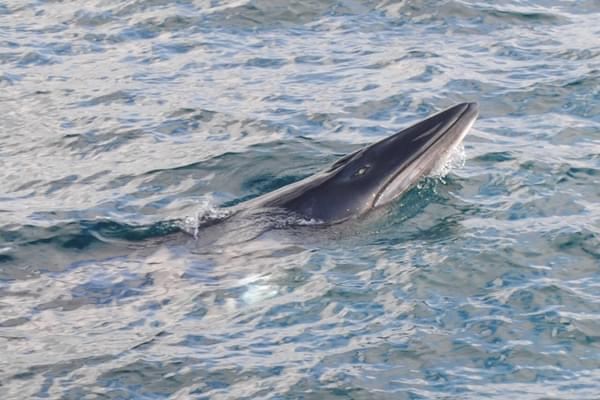
Main image: Fin whale (credit: Paul Soulby)
When you give, ORCA’s small team can do extraordinary things for whales and dolphins. Small charity, huge impact - thanks to you.