
For almost 20 years, Saga has helped ORCA turn ocean voyages into opportunities for vital marine research. Now, that work is receiving recognition from one of the UK's leading conservation bodies.
A cruise ship might not be the first place you would expect to find an important scientific research project. But for almost two decades, Saga has been helping ORCA demonstrate that some of the most valuable information about whales, dolphins and porpoises can be gathered from vessels already travelling across our oceans.
Since 2007, Saga has welcomed teams of ORCA's volunteer Marine Mammal Surveyors aboard its ships, allowing them to collect important scientific data while introducing thousands of guests to the extraordinary wildlife living beneath the waves.
Now, the value of that longstanding partnership has been highlighted by the Joint Nature Conservation Committee (JNCC), the UK's statutory adviser on nature conservation, as part of its growing collaboration with ORCA to improve marine mammal monitoring.
Turning voyages into valuable science
Understanding where whales and dolphins live, how their populations are changing and which areas are particularly important to them is essential if we are to protect them effectively.
Yet significant gaps remain in our knowledge, particularly in offshore waters where dedicated scientific surveys can be difficult and expensive.
Saga's ships, Spirit of Discovery and Spirit of Adventure, offer an invaluable opportunity to help address those gaps.
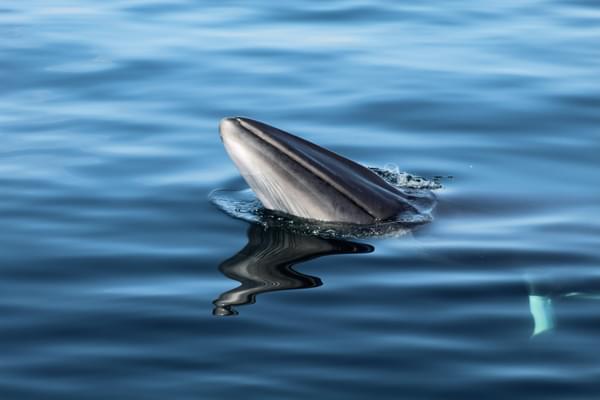
In 2025 alone, ORCA's volunteer teams completed an extraordinary 24,608 kilometres of survey effort across 13 Saga itineraries, recording 4,929 individual animals from 27 species.
But the partnership is now delivering something even more valuable.
Alongside traditional wildlife observations, ORCA's trained surveyors are conducting dedicated scientific surveys from the ships' bridges, using a technique known as distance sampling.
By recording the distance and angle of sightings, alongside environmental conditions and other information, scientists can develop more reliable estimates of marine mammal abundance and distribution.
Crucially, this allows us to move beyond simply knowing where animals have been seen, towards understanding how many may be using particular areas of the ocean.
Science everyone can be part of
What makes the Saga partnership particularly special is that science and public engagement take place alongside one another.
While surveyors undertake detailed research from the ships’ bridge, other ORCA team members are out on deck with guests, helping them spot and identify wildlife, answering questions and sharing their enthusiasm for marine conservation.
It's citizen science at its best, combining rigorous scientific research with opportunities for people to discover and understand the natural world.
JNCC's recognition of this work is particularly welcome as ORCA celebrates its 25th anniversary, reflecting the growing contribution our volunteers and shipping partners are making to marine conservation.
And as we approach 20 years of working with Saga in 2027, there is much to celebrate.
The evidence gathered through these voyages is helping build a clearer picture of marine mammal populations, supporting the scientific understanding needed to inform their protection.
None of this would be possible without Saga's longstanding commitment, the enthusiasm of its crews and guests, and the extraordinary dedication of ORCA's volunteer surveyors.
Together, we are demonstrating that a journey across the ocean can be much more than a voyage. It can also be a journey towards better protection for the remarkable animals that call it home.
Read JNCC's blog, Bridging the evidence gap for marine mammals: the growing impact of the JNCC and ORCA partnership, to learn more about how this collaboration is helping improve our understanding of marine mammals