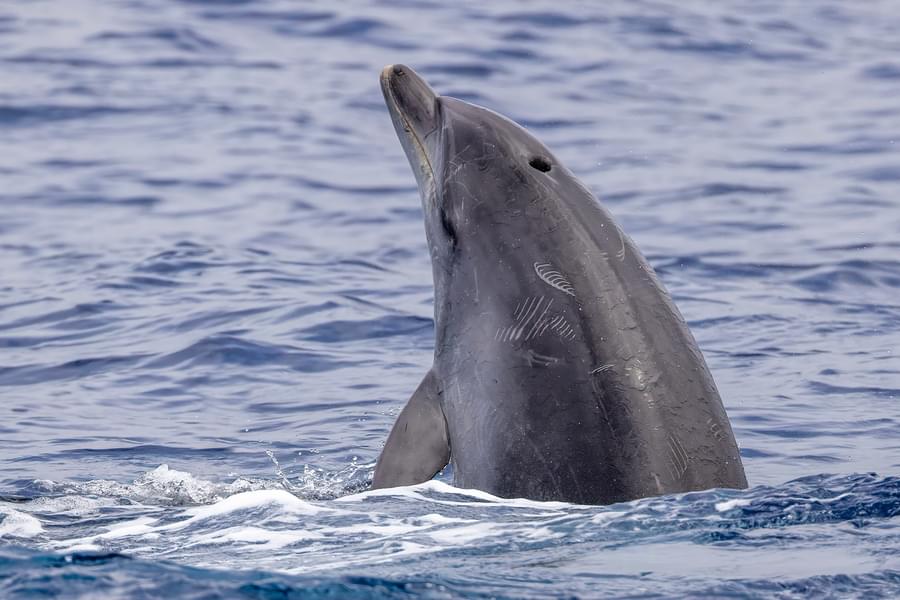
Europe’s first sea-based sanctuary for dolphins from captive facilities has received its final permits, clearing the way for it to begin offering dolphins a more natural home.
The San Paolo Dolphin Refuge is situated in the Gulf of Taranto in southern Italy. Developed by the Italian research organisation Jonian Dolphin Conservation, the project has been in development since 2018.
The refuge occupies a seven-hectare marine area beside the uninhabited San Paolo Island, the smaller of the Cheradi Islands. The island helps shelter the site from strong winds, currents and severe weather.
At the heart of the refuge is a 1,600-square-metre sea pen. Although this first enclosure is relatively modest, it is already larger than many tanks in European dolphinariums. It will allow dolphins to experience natural seawater, changing weather conditions and the sights, sounds and rhythms of a marine environment.
The main pen is connected to a smaller enclosure and a platform for veterinary care. The facility also includes a floating staff platform, overnight accommodation for caregivers, food preparation and cold-storage areas, lighting, shaded spaces and video surveillance.
Marine sensors and cameras will allow the dolphins and their environment to be monitored around the clock. Information will be transmitted to a control room at the Kètos Euro-Mediterranean Centre for the Sea and Cetaceans in Taranto.
The refuge will initially receive only a small number of dolphins as part of a carefully managed pilot phase. It is expected to expand gradually as the project develops and the team gains experience of meeting the individual needs of its residents.
Many dolphins born or held for long periods in captivity cannot simply be released into the open sea. They may lack the skills needed to find food and survive independently, while some require continuing veterinary care.
A well-managed coastal sanctuary offers an alternative. Dolphins can live in a larger and more stimulating natural environment while continuing to receive expert care, protection and monitoring.
The refuge has been developed with input from specialists in dolphin care, marine biology and veterinary medicine. Its partners and supporters include World Animal Protection Denmark and Fondazione con il Sud.
Sanctuaries alone cannot provide homes for every captive dolphin. Ending their exploitation will also require dolphinariums to stop breeding, improve conditions for animals who cannot be moved and make responsible lifetime-care plans for those who remain.
The San Paolo Dolphin Refuge nevertheless represents an important breakthrough. It demonstrates that a different future is possible - one in which the needs of dolphins take priority over their use for human entertainment, and today’s captive dolphins are the last generation to experience life in conventional tanks.
Become part of a global community working to create oceans alive with whales and dolphins. Membership supports our work and keeps you connected to our impact.