The Faroe Islands sell themselves to the world as a place of dramatic cliffs, untouched landscapes and unforgettable encounters with wild nature. Visitors are invited to experience a remote Atlantic paradise, shaped by sea, weather and wildlife.
But this week, the image was shattered again in the blood-red shallows.
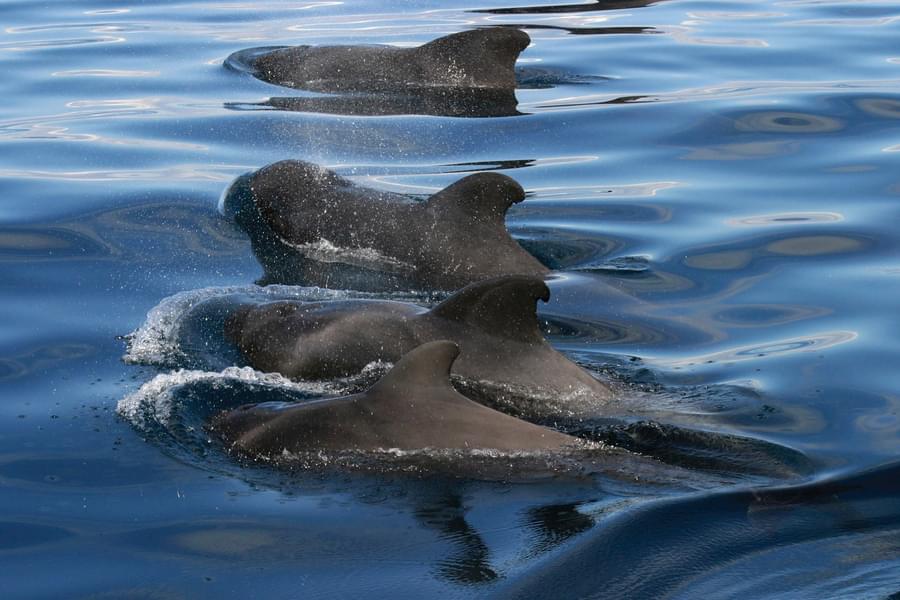
According to OceanCare, almost 700 pilot whales and Atlantic white-sided dolphins were killed in a single day across three drive hunts in the Faroe Islands - just hours after the Faroese Parliament voted unanimously to remove whale and dolphin hunting from the protection of its Animal Welfare Act. The reported slaughter included an estimated 402 pilot whales driven ashore at Sandagerði, near the capital Tórshavn, alongside around 160 Atlantic white-sided dolphins killed at Skálafirði and another 132 at Streymnesi.
This is not an unfortunate accident, nor an isolated incident. It is the deliberate continuation of a practice that causes fear, exhaustion, injury and death to highly intelligent, socially complex marine mammals. They live in close-knit groups, communicate, cooperate, grieve and rely on one another. In the grindadráp, whole families can be driven by boats towards shore, stranded in panic, and killed one by one.
What makes this latest killing even more appalling is the political message sent alongside it. Rather than strengthening protection for sentient marine mammals, the Faroese Parliament appears to have carved them out of animal welfare law altogether. OceanCare reports that the vote was 28 in favour and none against, with the Faroese Whalers’ Association welcoming the change because whalers could return to the grind without fear of being accused of breaching animal welfare legislation.
That is contemptuous - not only towards the animals themselves, but towards the growing international concern about the cruelty of these hunts. In an age when the world is confronted daily by things we can scarcely believe, the Faroes continue to shock. Faced with mounting evidence of suffering, the response has not been to strengthen protection, but to strip pilot whales and dolphins from the reach of animal welfare law. Frankly, it is beyond belief.
The Faroes cannot have it both ways. They cannot continue promoting themselves as an unspoilt wild destination while authorising the mass slaughter of one of the very reasons people are drawn to the North Atlantic: its extraordinary marine life. The official tourist board invites visitors to enjoy “breathtaking hikes across untouched landscapes” and boat trips through dramatic fjords. Yet those same waters are still being used as killing grounds.
Tourists do not travel to wild places simply to admire scenery. They go because these places still feel alive - because seabirds, whales, dolphins and seals are part of the wonder. When a destination trades on wildness while permitting the organised killing of wild marine mammals, it undermines its own story.
Other organisations have repeatedly documented the scale and cruelty of the Faroese hunts. Sea Shepherd reported that the first grind of 2026 killed more than 125 pilot whales and several Atlantic white-sided dolphins, while WDC has raised concerns about welfare breaches and previous hunts involving calves and pregnant females.
ORCA believes there is no place for this practice in a modern society. Tradition cannot be used as a shield against cruelty forever. Culture evolves. Communities evolve. Laws evolve. The Faroe Islands now face a clear choice: continue defending an indefensible slaughter, or show genuine leadership by ending the grind and protecting the marine mammals that make their waters so remarkable.
The world is watching - and it is outraged.

ORCA’s work is funded by donations from people who care about whales and dolphins. Your support helps us monitor, turn evidence into protection, and create safer oceans for these gentle giants.