This week marked a significant milestone for marine conservation in the UK Parliament, as the Marine Mammals (Protection) Bill was introduced by Andrew George MP.
For those working to protect whales, dolphins, porpoises and seals, this is a moment worth recognising. Described across the sector as “good news for marine mammals”, the Bill is a clear signal that the issue of marine mammal disturbance, long overlooked in policy, is now firmly on the political agenda.
That focus is critical. Disturbance from vessel traffic, noise and human activity is one of the most pervasive and least effectively managed threats facing marine mammals in UK waters.
As George went on to emphasise:
“…including from noise, vessel traffic, and other activities which can disrupt feeding, breeding and migration.”
For marine mammals, these impacts are not minor. They affect survival, reproduction and long-term population health. What makes this moment particularly significant is the breadth of political backing. Supported by MPs from across all major parties, the Bill represents a rare point of consensus - and a strong foundation for future action.
And this did not happen by accident.
Wildlife and Countryside Link, in sharing the news, made clear that this is the result of sustained collaboration across the sector - including recent roundtables that brought together NGOs, policymakers and experts to focus on practical solutions. Those conversations have helped turn evidence into political momentum.
This is what a campaign win looks like. It shows that when the sector works together, aligning science, advocacy and political engagement, change begins to happen. But while the argument has been powerfully made, now pressure has to be exerted to see it translated into action.
But the debate also underlined the scale of the challenge ahead.
Alongside disturbance, MPs pointed to the ongoing threat of “ghost gear” - lost or discarded fishing equipment that continues to entangle cetaceans and seals - as well as wider issues of marine litter and unsustainable practices at sea. These are systemic problems that require systemic solutions.
There is increasing recognition that this means moving towards a more circular approach to fishing gear, preventing waste before it enters the ocean, rather than dealing with its consequences after the fact.
At this early stage, the Government has not set out a detailed response - but that's typical for a first reading. And a private Bill like this, while meaningful in evidencing cross-party support, is a means of raising an issue with no expectation that it will pass into law. But the direction of travel is clear. Marine mammal protection is rising up the agenda, and the political space for stronger action is opening.
For ORCA, this is both encouraging and motivating. We see the impacts of disturbance and entanglement first-hand through our work at sea and this Bill reflects those realities being heard in Parliament.
But it is only the beginning. Because while this is a campaign success, it is far from being a policy solution. The measures needed to properly protect marine mammals - from reducing disturbance to tackling entanglement and cumulative pressures - still need to be developed, strengthened and implemented.
The opportunity now is to build on this momentum and to turn cross-party support into concrete action. And to ensure that the signal sent in Parliament translates into meaningful protection in the waters where these animals live.
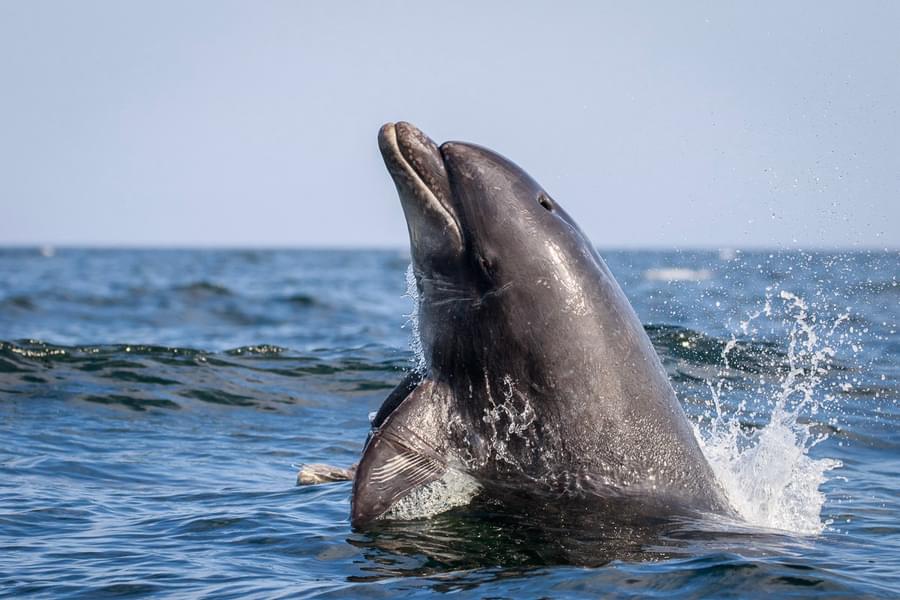
Main image: Bottlenose dolphin (credit: Catherine Clark)
ORCA’s work is funded by donations from people who care about whales and dolphins. Your support helps us monitor, turn evidence into protection, and create safer oceans for these gentle giants.