On ORCA surveys, we’re lucky: we meet animals on their terms. Sometimes that means a dorsal fin slicing through a slate-grey sea; sometimes it’s a distant blow, or the hush that falls across a deck when wildlife appears at the edge of visibility. And on rare Arctic routes, it can even mean a polar bear, a reminder that this “sea bear” is a marine mammal, every bit as tied to ocean and ice as the whales and dolphins we exist to protect.
That’s why a new report, launched this week by Action for Dolphins and World Animal Protection, is so important. No Substitute for the Wild argues that Sea World on Australia’s Gold Coast is the last facility in the country still breeding both polar bears and dolphins for display and entertainment - and that the structural limits of captivity mean these animals’ core needs can never truly be met over the long term.
Polar bears: a hard-wired climate mismatch
Sea World markets its Polar Bear Shores exhibit as an “Arctic summer” inspired by Hudson Bay, Canada. The report counters this with climate comparisons showing the Gold Coast is consistently warmer than Hudson Bay across the year - a profound mismatch for a species evolved for cold conditions.
But it’s not just temperature. Wild polar bears range across almost inconceivably vast territories, tens to hundreds of thousands of square kilometres, tracking sea ice and prey, responding to changing conditions, and choosing when to move, rest, hunt or withdraw. How could you ever replicate that scale, complexity, or unpredictability in a concrete compound?
Sea World currently houses three polar bears (two wild-born males transferred from Canada, and one female born at Sea World). A decision to keep breeding, the report says, effectively commits future generations to the same constraints for decades.
Dolphins: space, sound, and choice
For dolphins, the report highlights how captivity compresses a life built around movement, exploration, and sound. It notes the potential for chronic noise exposure generated by rollercoasters, helicopters, fireworks and crowds - in an environment where dolphins can’t simply swim away.
What Sea World says
Sea World states that animal welfare is its highest priority, describing its polar bears as “ambassador animals” (we somehow doubt they’ve had any say in that…) and framing Polar Bear Shores as a large “Arctic summer” style habitat.
It also outlines its “Welfare WISE” approach, modelled (it claims) on the Five Domains, and highlights Zoo and Aquarium Association (ZAA) accreditation (which itself uses the Five Domains framework).
Why the “Five Domains” claim doesn’t rescue the argument
Here’s the thing: the Five Domains isn’t a badge you stick on a website. It’s a welfare framework designed to assess how an animal’s lived reality shapes its mental state - including whether it has real opportunities for positive experiences, agency and control. It goes beyond “avoiding suffering” and asks whether an animal can thrive, not merely cope or even just live.
So when a theme park says it’s “guided by the Five Domains”, it’s inadvertently inviting the question that matters most: can these animals meaningfully meet the Behaviour and Mental State domains in captivity? If your Five Domains model ends with animals spending a lifetime in an enclosure they didn’t choose, then it’s about marketing - not welfare. And that is unconscionable.
You can optimise diet and veterinary care (Domains 1–3) and still fail the “so what does life feel like?” test that the Five Domains is actually for. Just calling it Five Domains doesn’t make captivity equivalent to the wild; it simply gives you a clearer vocabulary for describing why it isn’t.
Where we go from here
The report’s central recommendation is straightforward: end captive breeding of dolphins and polar bears in Queensland, stopping the pipeline of animals born into entertainment and allowing a planned phase-out over time.
From ORCA’s perspective, it’s the same principle we see at sea: wild animals thrive on freedom, complexity, and choice - and there will never be a substitute for that.
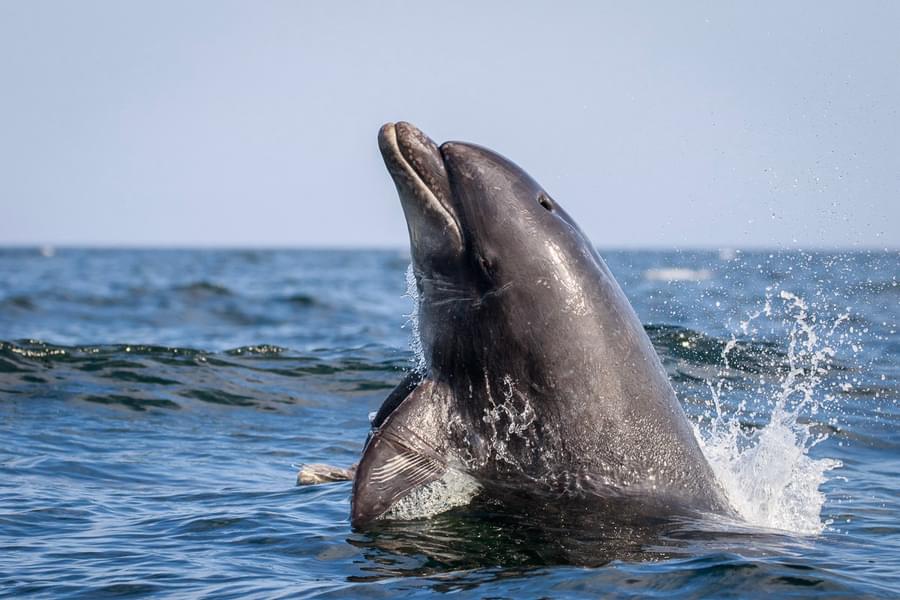
Main image: bottlenose dolphin (credit, Catherine Clark)
Become part of a global community working to create oceans alive with whales and dolphins. Membership supports our work and keeps you connected to our impact.