
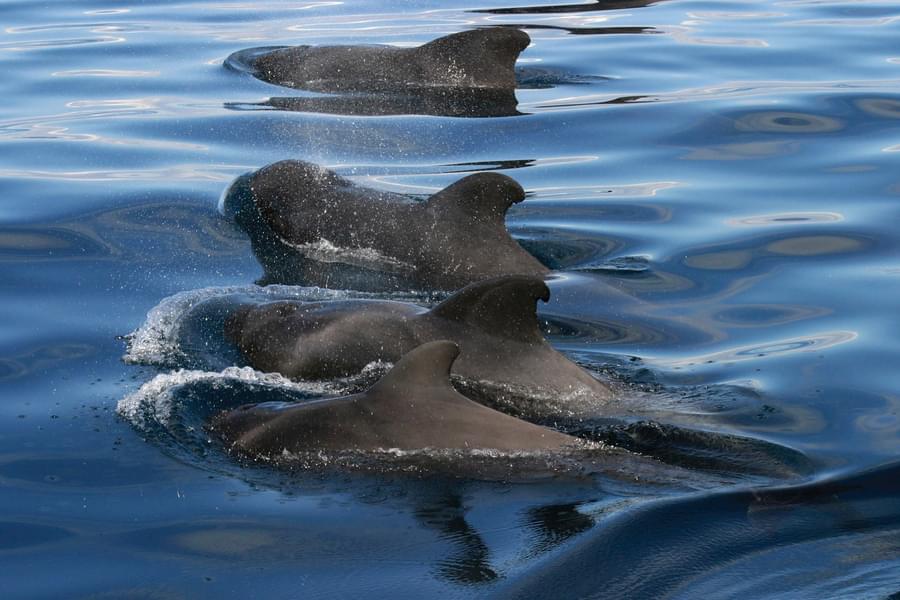
In July 2023, 55 long-finned pilot whales stranded on Tràigh Mhòr at Tolsta on the Isle of Lewis in one of the worst such events seen in Scotland in recent decades. Now, a new Scottish Government report has offered the clearest explanation yet of what happened - and its findings are as sobering as they are important.
The detailed and insightful report does not point to one neat, simple cause. Instead, it describes what it calls a “convergence of biological, behavioural and environmental factors”. Investigators concluded that one adult female was likely experiencing a prolonged and difficult birth. In a species as tightly bonded as the long-finned pilot whale, that mattered enormously: the rest of the pod appears to have stayed close to her, responding as they naturally would to a member in distress.
That instinct to remain together may have been fatal. According to the investigation, the whales then moved into the shallow, gently sloping bay at Tolsta, where fine suspended sediments and local seabed conditions may have created an “acoustic trap”. In other words, the very echolocation system these animals depend on to orientate and navigate may have worked less effectively in those nearshore conditions, making it harder for them to find their way back to deeper water. The report also indicates the animals had been in generally good health before the stranding, which makes the chain of events all the more tragic.
One of the most striking things about the report is what it says about mass strandings more broadly. These events are rarely simple. As Scottish Marine Animal Stranding Scheme (SMASS) lead scientist Dr Andrew Brownlow put it, they are “rarely the result of a single cause”. That matters, because public discussion often rushes to find one explanation - disease, noise, tides, weather, predators, human disturbance. The Tolsta investigation is a reminder that, in the real world, strandings can emerge when animal behaviour, individual vulnerability and local environmental conditions collide.
That is especially important in a changing ocean. Long-term SMASS data suggest that mass strandings of whales and dolphins in Scottish waters have increased in scale and frequency by up to 300% over the past 30 years. Separate recent reporting on Scotland’s strandings record found 5,147 cetaceans recorded dead between 1992 and 2022, with some species showing rises of up to 800%. Almost exactly a year after Tolsta, another 77 long-finned pilot whales stranded on Sanday in Orkney - underlining that this is not simply a story from the past, but part of a wider and worrying pattern.
What this new report offers, above all, is evidence. It helps move the Tolsta tragedy beyond speculation and towards understanding. But it also leaves us with a clear warning. If strandings are becoming more frequent, larger, or more complex, then every single event matters - not only as a welfare emergency, but as a signal about the pressures marine wildlife is facing. For those of us who care about whales and dolphins, that should sharpen the case for better monitoring, better science and oceans managed with far greater care.
Help protect whales and dolphins
Every donation powers vital research, protects habitats, and supports our volunteer citizen scientists around the world. Your support makes it possible for ORCA to take action where it matters most.