
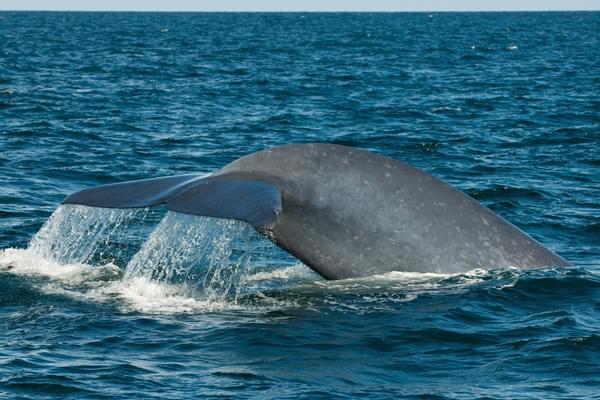
Every year, whales return to Antarctica to do something essential: feed. For many baleen whales, especially humpbacks, the Southern Ocean is where they build the energy reserves that sustain migration, breeding and calf-rearing. New research has underlined just how important those feeding grounds are, showing that adult humpbacks can lose around 36% of their body condition during migration, the equivalent of about 11,000kg of blubber or the energy gained from roughly 57,000kg of Antarctic krill.
That matters because krill are not just another fishery resource. They are a keystone species at the heart of the Antarctic food web, supporting whales, seals, penguins and seabirds. There is also growing scientific evidence that when krill availability falls, whales suffer. An eight-year study of humpback whales in the Western Antarctic Peninsula found that pregnancy rates were positively correlated with krill availability, with rates varying from 29% to 86% across years. In other words, less krill can mean fewer pregnancies and slower recovery for whale populations.
This is why concern is growing around the Antarctic krill fishery and its continued certification as “sustainable” by the Marine Stewardship Council (MSC). To be fair, the MSC says its standard is designed to be precautionary for keystone species such as krill. Certified fisheries must show that stocks are self-sustaining, ecosystem impacts are minimised, and management is effective. It also says fisheries must provide evidence that they are not causing serious or irreversible harm to dependent wildlife populations.
But critics including WWF and ASOC argue that the key issue is no longer simply the total volume of krill taken. It is where that catch is concentrated. A critical Commission for the Conservation of Antarctic Marine Living Resources conservation measure, CM 51-07, previously helped spread catches across subareas within the wider fishery. It was still in force in 2024, when subarea catch limits sat within an overall 620,000-tonne cap. After that measure lapsed amid political deadlock, the 2024–25 fishery hit the 620,000-tonne limit for the first time and closed early, with reports that industrial trawlers were able to concentrate effort in smaller habitats used by whales, penguins and seals.
That distinction is crucial. A fishery can appear sustainable on paper at a broad scale, while still creating acute pressure in the places that matter most to wildlife. For ORCA, that is the heart of this issue. If krill is removed in excess from key whale feeding grounds, the risk is not abstract. It goes directly to whale health, breeding success and long-term resilience - especially in an Antarctic ecosystem already under growing climate stress.
Certification schemes have an important role to play in driving higher standards. But credibility depends on keeping pace with the science. Right now, that means recognising that for krill, location matters as much as catch. Protecting whales requires more than a sustainable total. It requires precautionary management that prevents concentrated fishing in the very places these animals come to feed, recover and survive.
We are ORCA, one of the leading whale and dolphin charities globally. Through volunteering, citizen science, and research, we protect whales and dolphins and the oceans they call home. Anyone can make a difference - and every action counts.